
How Is Data Analytics Used in Health Care?
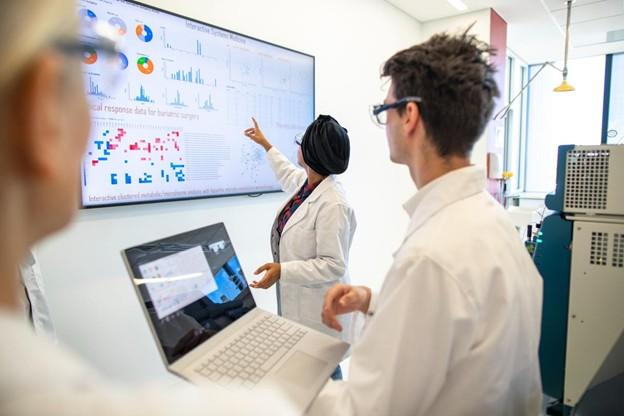
Healthcare leaders understand that effectively harnessing the power of data analytics can help their organizations achieve their goals. For example, when healthcare data platform firm Arcadia surveyed healthcare leaders in 2024, 95 percent of respondents said data analytics could enhance their clinicians’ productivity. However, the same survey determined healthcare organizations underutilized 47 percent of their data when they made both business and clinical decisions.
Healthcare organizations of all kinds can benefit from extracting insights from data and using those insights to improve their operations and healthcare services. But to do that, those organizations need professionals who have expertise in healthcare data analytics.
Individuals who are considering enrolling in a Master of Business Administration or a Master of Business Analytics program can benefit from exploring the many ways professionals can apply data analytics techniques to make the most of healthcare data.
What Is Data Analytics in Health Care?
To understand what data analytics can offer, it is helpful to start by answering a basic question: What is data analytics in health care?
Healthcare organizations have a vast array of data at their disposal. For example, they have access to data from:
- Electronic health records
- Medical images
- Genome maps
- Prescription records
- Medical test records
- Health insurance claims
- Medical devices and wearable sensors
Data analytics professionals can analyze this data to identify patterns, trends, and other meaningful indicators that can help inform healthcare leaders’ and providers’ decision-making and, ultimately, improve their organizations’ effectiveness and efficiency.
When analyzing healthcare data, however, professionals face some unique challenges. For example:
- Maintaining patients’ privacy and ensuring the healthcare data’s security is paramount. Employing data encryption and other security measures is a significant consideration for healthcare data analytics professionals.
- Insufficient standardization across data sources can make it difficult to analyze healthcare data. The ability to bring together and analyze data from many sources is a skill that can benefit healthcare data analytics professionals.
How Is Data Analytics Used in Health Care?
Data analysts use a variety of approaches to analyze healthcare data and reveal important insights. For instance, they use:
- Real-time analytics to analyze data as it is generated to enable healthcare organizations to take appropriate actions in critical or time-sensitive situations
- Descriptive analytics to analyze data from the past to trace the movement of performance indicators, analyze organizational efficiency, and identify trends in patients’ outcomes
- Diagnostic analytics to pinpoint why certain circumstances arose and identify the factors that contributed to those circumstances
- Predictive analytics to forecast future events
- Prescriptive analytics to analyze multiple options and recommend the best course of action
Data Analytics Tools
Healthcare data analytics professionals use a variety of tools. For example, they use:
- Tools driven by artificial intelligence that glean insights from data
- Tools that rely on machine learning that aid in decision-making
- Electronic health information systems that include data analytics capabilities
- Aggregation tools that gather different sources of healthcare data together
- Cleaning and normalization tools that help to ensure that healthcare data is complete and accurate
- Visualization tools that enable professionals to present complicated healthcare data in understandable ways
- Fraud detection tools that help protect against potential financial loss
6 Benefits of Data Analytics in Health Care
People who aspire to careers in the business side of health care, as medical and health services managers, for example, need to be familiar with the ways they can use data analytics to improve health care. The examples below are just a few of the benefits that data analytics brings to health care.
1. Strengthens Clinical Decision-Making
Data analytics tools such as artificial intelligence and algorithms can be employed to analyze patients’ health information and test results in real time. That analysis can help healthcare providers make the best clinical decisions and identify the best treatment plans to improve their patients’ health.
2. Enhances Public Health Work
Professionals in public health can harness the power of data analytics to pinpoint public health trends and detect health issues early in their development. This can enable them to respond more quickly to public health challenges and contain disease outbreaks more quickly.
3. Predicts Chronic Disease
Healthcare data analytics predicts chronic disease. Specifically, data analytics tools can help to identify patients who are at risk of developing a chronic disease and enable doctors to monitor these patients, improve their ability to achieve positive health outcomes, and potentially even save their lives.
4. Reduces Errors in Health Care Delivery
Data analytics can assist healthcare organizations in reducing errors in the provision of health care services and in improving patients’ safety. For example, using data analysis to examine medication error information can help organizations identify the causes of those errors and design methods for preventing them in the future.
5. Improves Medical Research
By incorporating data analytics into medical research practices, scientists have the opportunity to generate more meaningful results. For example, data analytics techniques can be used to assist in selecting the best individuals for participation in clinical trials, improving the safety of clinical trials, and accelerating the development of new drugs.
6. Streamlines Healthcare Resource Allocation
Healthcare organizations can use data analytics tools to ensure they allocate their staff and supplies in the most efficient manner. For example, these tools can aid in aligning staffing scheduling with patients’ needs, ensuring that supply inventories are sufficient to meet demand, and identifying the specific locations within a health care organization where resource needs are the highest.
Develop Data Analytics Skills to Strengthen Our Healthcare System
The capacity of healthcare data analytics to improve the effectiveness and efficiency of health care delivery is extensive. When data analytics professionals bring their expertise to health care organizations, they have the opportunity to make significant contributions to improving patients’ health outcomes and enabling healthcare organizations to enhance their operations.
If you have an interest in acquiring data analytics knowledge, explore the MBA or Master of Business Analytics program at Tulane University’s Freeman School of Business to learn how one of our programs can help you achieve your career goals. Providing industry-driven expertise that positions professionals for leadership roles, these programs help students establish a strong foundation for career advancement.
Take the first step on your journey toward a graduate education with Tulane University today.
Sources:
- Arcadia, “Study: 47% of Data Is Underutilized in Healthcare Decision-Making”
- Ascend Analytics, “Healthcare Data Analytics: Tools and Platforms”
- EvidenceCare, “Top Healthcare Analytics Tools to Empower Clinical Decisions”
- Healthcare Information and Management Systems Society, “The Growing Importance of Data Analytics in Health Informatics”
Incite Health, “The Big Data Revolution in Drug Development, Clinical Trials and Precision Healthcare” - Journal of Electrical Systems and Information Technology, “Big Data Analytics in Healthcare: Data Sources, Tools, Challenges, and Opportunities”
- Kodjin, “Data Analytics in Healthcare: Challenges and Uses”
- MicroHealth, “4 Types of Data Analytics and How They Improve Healthcare”
- SPD Technology, “Healthcare Data Analytics: Transforming Patient Care for Improved Health Outcomes”
Interested in advancing your education and/or career? Learn more about Freeman’s Specialized Master’s programs. Find the right program for you.
Recommended Reading
- The Importance of AI Integration for Business Leaders
- Online vs. In-Person MBA: Benefits and Differences
- How to Develop a Global Mindset in Business
- How to Get Started in Sustainable Finance
- How to Improve Your Business Negotiation Skills
- Supply Chain Analyst: Salary and Job Description
- Renewable Energy Consultant: Salary and Job Description
- What Does It Take to Work in Government Accounting?
Other Related Articles
- Beta Gamma Sigma recognizes newest members
- Futurist Series highlights AI’s impact on private equity
- Freeman makes big gains in latest U.S. News & World Report rankings
- Business Insider: The sneaky truth about the wave of AI layoffs
- The AI Innovator: The Often Missing Skill in the AI Boom
- Reworked: How managers weigh employee AI use in performance reviews
- PsyPost: AI boosts worker creativity only if they use specific thinking strategies
- Harvard Business Review: Why AI Boosts Creativity for Some Employees but Not Others
